

- India,
- 07-Apr-2026 09:36 AM IST


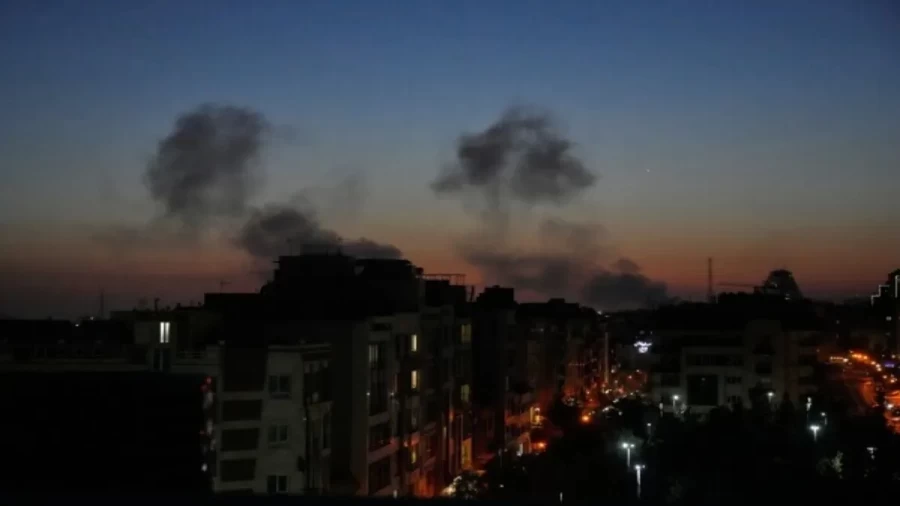
US President Donald Trump has issued a definitive ultimatum to the Iranian government, demanding the immediate reopening of the Strait of Hormuz. According to official statements, the US administration has set a deadline of 8 PM Eastern Time on Tuesday for Iran to comply or face extensive strikes on its national infrastructure. This development coincides with reports of significant explosions across the Iranian capital, Tehran, and the neighboring city of Karaj, as Israeli and US forces target strategic locations in response to ongoing regional tensions.
Trump Sets Infrastructure Destruction Deadline
President Donald Trump has warned that failure to meet the Tuesday evening deadline will result in the destruction of Iran's bridges and power generation plants. During a press briefing, Trump stated that the Iranian leadership had previously requested additional time, which was granted, but the window for negotiation is now closing. He emphasized that if the Strait of Hormuz isn't cleared for international transit, the US military is prepared to target essential utilities, potentially reverting the nation's infrastructure to a "Stone Age" state. Trump also suggested that the US might consider imposing tolls on the waterway once control is established.
Airstrikes Reported in Tehran and Karaj
Reports from the Iranian capital indicate that multiple residential areas have been impacted by recent aerial bombardments, while the Iranian Red Crescent Society (IRCS) confirmed that rescue operations are currently underway in Tehran following strikes that damaged several buildings. According to the semi-official Mehr News Agency, a synagogue located in central Tehran was completely destroyed during the attacks. US defense officials have stated that these operations are aimed at dismantling the infrastructure of the Iranian regime in response to recent provocations and missile launches.
Iranian Missile Strikes on Saudi Arabia and Israel
In a significant escalation of regional hostilities, Iran launched a series of missiles and drones toward Saudi Arabia and southern Israel. The Saudi Arabian Ministry of Defense reported that its air defense systems successfully intercepted and destroyed 7 ballistic missiles fired toward the eastern region of the kingdom. However, some projectiles struck the Al Jubail industrial hub, causing major fires at petrochemical and energy facilities. Simultaneously, sirens were heard across southern Israel as Iranian missiles targeted various locations, prompting the activation of Israeli air defense protocols and emergency responses.
Casualties in Lebanon and Civil Mobilization
The conflict has also resulted in casualties beyond Iranian borders. In Beirut, Lebanon, Israeli airstrikes on Tuesday led to the deaths of at least 4 individuals and caused extensive damage to vehicles and residential structures. In response to the growing threat of infrastructure attacks, the Iranian Ministry of Sports and Youth has called upon the nation's citizens to form "human chains" around key power plants. Officials have urged students, artists, and athletes to gather at energy sites to demonstrate public resolve against foreign military intervention and to protect national assets.
Strategic Importance of the Strait of Hormuz
The Strait of Hormuz remains the central point of contention in the escalating crisis. As one of the world's most vital maritime oil transit routes, any disruption to its operations has global economic implications, while president Trump’s assertion regarding the imposition of tolls reflects a shift in US policy toward direct control over the waterway. Iranian authorities have countered by threatening to target energy infrastructure in other nations if their own facilities are attacked, further heightening the risk of a broader regional conflict involving multiple international stakeholders.
