

- India,
- 07-Apr-2026 09:46 AM IST


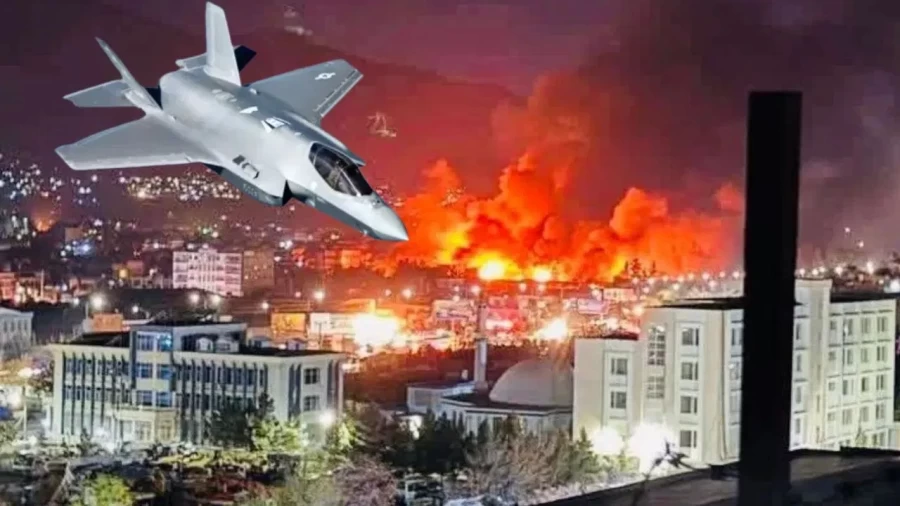
The United States military has conducted a high-precision airstrike targeting a strategic underground headquarters of the Islamic Revolutionary Guard Corps (IRGC) in Tehran, Iran. According to reports from Fox News and defense officials, the operation was executed as a 'double strike' using specialized bunker-buster munitions. The strike aimed at a location where senior IRGC commanders were reportedly convening for a high-level meeting.
S. Central Command (CENTCOM), while multiple B-2 Spirit stealth bombers were deployed from Whiteman Air Force Base, completing a grueling 36-hour non-stop flight to reach the target. The use of B-2 bombers underscores the strategic importance of the target, as these aircraft are designed to penetrate sophisticated air defense systems and deliver heavy payloads.
The Double Strike and Bunker-Buster Munitions
According to military sources, the operation utilized a 'double strike' tactic. After the initial wave of bunker-buster bombs struck the underground facility, a second round of strikes was launched as medical and rescue teams arrived at the site. The munitions used are specifically designed to penetrate deep into reinforced concrete structures, similar to those housing Iran's nuclear facilities. S. officials stated that the target facility has been completely neutralized, and there is a high probability that several high-ranking IRGC commanders were killed in the process.
Command Execution and Mission Logistics
The logistics of the strike involved a significant display of long-range aerial capability. The B-2 bombers, known for their stealth and heavy-lift capacity, utilized the same class of bunker-buster bombs that have been previously tested for use against hardened nuclear sites. Admiral Brad Cooper's command ensured that the strike was synchronized with intelligence reports regarding the presence of senior leadership at the Tehran facility, while the destruction of the headquarters is seen as a major blow to the IRGC's operational command structure within the capital.
Trump's Ultimatum and Strategic Context
This military action follows a series of stern warnings from Donald Trump, while during a recent press briefing, Trump threatened massive strikes against Iran's energy, water, and gas infrastructure if the Strait of Hormuz wasn't reopened by Wednesday. S. is prepared to target civilian and industrial frameworks if maritime blockades continue, while Plus, Secretary of Defense Pete Hegseth confirmed that intense operations against Iranian assets are ongoing and suggested that the scale of these attacks could escalate Importantly in the coming days.
Iranian Response and Civil Appeals
In response to the threats against the nation's energy infrastructure, Iranian officials have called for public mobilization. Alireza Rahimi, Iran's Deputy Minister of Youth and Sports, urged the youth, artists, and athletes to form human chains around power plants across the country. This move is intended to serve as a protest against the threat of American bombardment and to act as a human shield for critical utilities. The Iranian government has condemned the strikes as a violation of international law and national sovereignty, while tensions in the region continue to reach unprecedented levels.
