
- India,
- 26-Nov-2026 09:32 AM IST



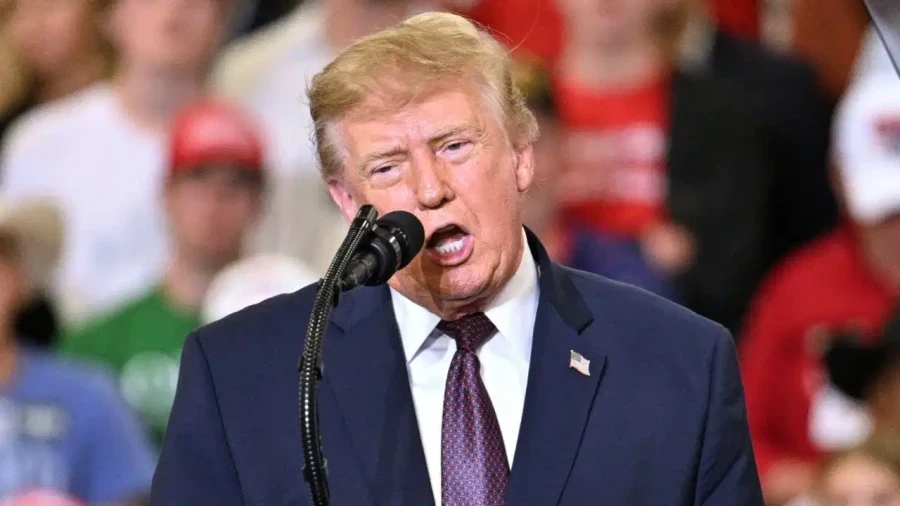
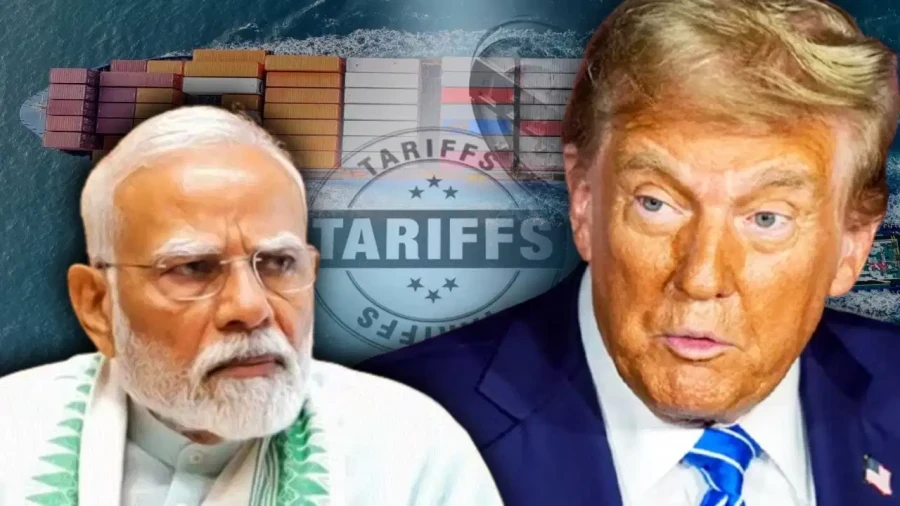
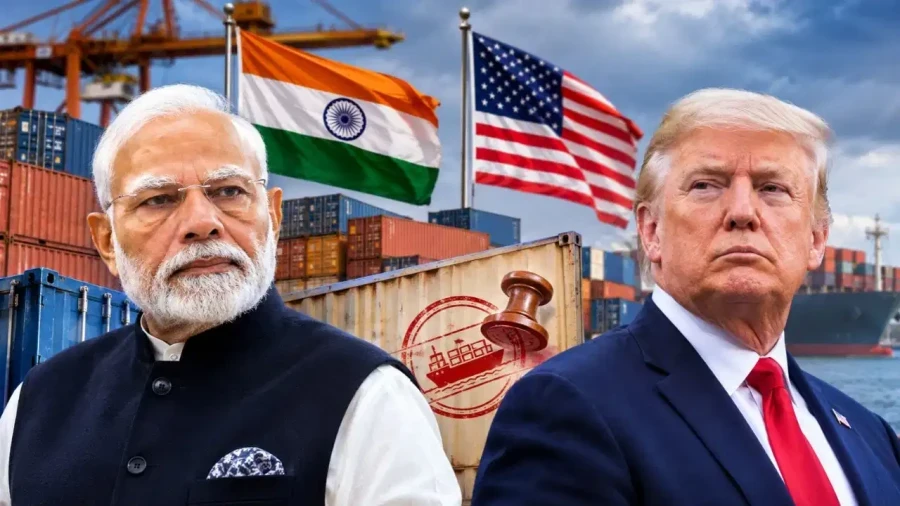
US President Donald Trump has once again sparked major turmoil in the global trade market. On Wednesday, the Trump administration announced new import taxes on 14 major economies including India, China, and the European Union, with most of them being Asian nations. Following this decision, the biggest threat looming over Indian exporters is that goods heading to the US could face up to 25 percent in additional tariffs. However, hidden amidst this strict announcement is a specific condition that could save Indian businesses from a massive blow.
The Trump administration has taken this step under Section 301 of the Trade Act of 1974. This scope could cover about three-fifths of total US imports. In February of this year, the US Supreme Court ruled that the president can't bypass Congress by citing economic emergencies and arbitrarily impose tariffs on everyone. This court ruling caused a loss in tax revenue for the government. Now, this path has been devised to compensate for that loss and replace the taxes imposed in April of last year. The US alleges that these 14 nations are heavily subsidizing their factories to produce excess goods, thereby crippling American companies.
The Condition That Protects Indian Exporters
The key to this entire matter for Indian businesses lies within a single condition. The Office of the United States Trade Representative (USTR) has indeed proposed a 25 percent additional tax on Indian goods, but it has also clarified that if India and the United States sign a bilateral trade agreement (BTA) within the stipulated timeframe, this tax will be reduced and limited to 17 percent.
This is the exact turning point where crisis can transform into an advantage for India, while in this new list, the US has placed most developing nations in the 18 percent tax category. Meanwhile, major Asian competitors like China, Vietnam, and Singapore fall into the upper category of 20 percent. If the first part of the agreement, prepared between India and the US in February of last year, gets officially sealed in time, India will gain a direct advantage over its competitor countries, while What's more, the second piece of great relief for Indian exporters is that India's two largest export sectors, pharmaceuticals and mobile phones, have been kept completely outside the scope of this additional tariff.
The Trump administration will now seek opinions on this proposal from the affected industries. A hearing has been scheduled for January 25, 2027, and it's expected that the new taxes could come into effect by February next year. Earlier on February 2, a consensus had also been reached between India and the US for an 18 percent additional tax, but it had to be halted after the Supreme Court struck down the previous tariffs. Government officials state that the trade deal is nearly finalized and will be officially signed as soon as the US finalizes its new tariff framework.
India Delivers a Clear and Direct Response
The US didn't put India on this list without reason. The USTR investigation report has raised questions over several of India's domestic policies. Specifically, the US has targeted the Production Linked Incentive (PLI) scheme operating under the Aatmanirbhar Bharat initiative. In addition, objections have been raised regarding regulations related to the steel, solar, health, and ICT sectors. The report accuses India of shortcomings in labor protection, market barriers, strict financial policies, and reliance on raw materials sourced from non-market economies. US Trade Representative Jamieson Greer claims that such policies by various nations distort market equilibrium and harm American factories and jobs.
India strongly rejected Washington's allegations on Wednesday itself. The government clearly stated that none of India's sectors possess excess production capacity. India is currently examining the USTR notice in detail. The government's stance is completely clear that any trade-related issue must be resolved through mutual dialogue and within the framework of a BTA rather than through unilateral taxation.
Hardest Blow on Goods from These Nations
Apart from India, other countries falling under the purview of this new tariff include China, the European Union, Taiwan, Brazil, Bangladesh, Cambodia, Indonesia, Malaysia, Singapore, Switzerland, Thailand, and Vietnam. Meanwhile, investigations against Mexico and Norway are still ongoing. The proposed tax rates range between 15 and 35 percent.
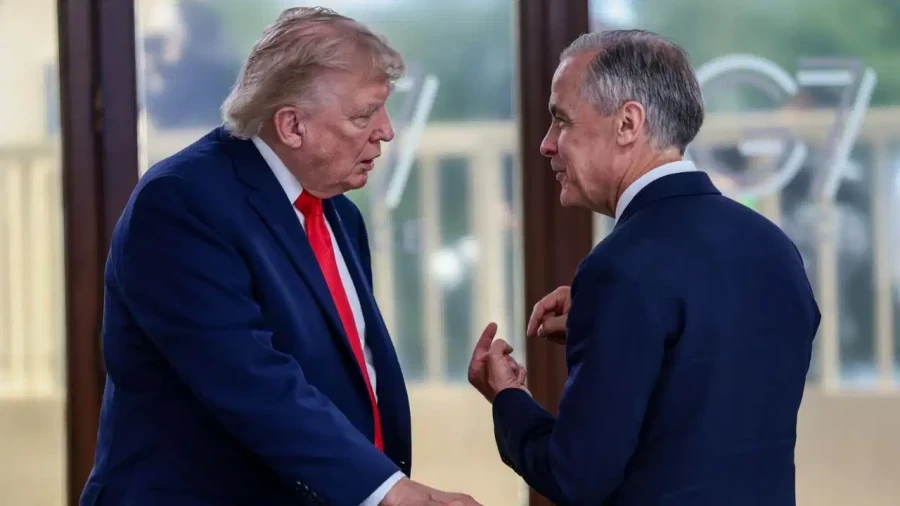
The harshest crackdown has been directed at China, against which the US has prepared a lengthy 456-page investigation report. A new 20 percent tax on certain Chinese goods will be added on top of existing tariffs, pushing the total tax up to 45 percent. However, a proposal has also been made to grant a major exemption to USD 30 billion worth of Chinese goods under the trade truce expiring on January 10, 2027. Just last week, Trump met President Xi Jinping in the Chinese city of Shenzhen and they're scheduled to meet again next month at the G20 summit in Florida. Meanwhile, Chinese Foreign Ministry spokesperson Guo Jiakun opposed the move, stating that nobody benefits from a trade war and disputes must be resolved through dialogue.
Brazil has faced separate strict measures after trade talks stalled. Proposals include higher taxes on its raw and refined sugar and a 10 percent new tax on aircraft, which is certain to deal a blow to Embraer, Brazil's largest aircraft manufacturer. A 20 percent tax also remains pending on Vietnam until its agreement is finalized. On the bright side, there is a proposal to exempt semiconductors and high-tech products from Taiwan and South Korea, which are essential for AI technology. 5 percent forced labor-related tariffs imposed on 60 countries in July.
Wave of Opposition Within the United States
The fire of Trump's tariff war isn't limited to foreign countries alone; there is massive anger within the United States itself. Data up to September 2026 shows that due to rising inflation, the annual expenditure of every average American family has increased by USD 4,700. An AP voter poll revealed that nearly two-thirds of American voters believe Trump's policies have ruined the economy. The Republican Party had to pay the price for this resentment in the mid-term elections held this month, when voters gave Democrats a majority in both houses of Congress (the House and the Senate).
Asian-American Representative Grace Meng launched a sharp attack on Trump's decision, stating that from New York's Chinatown to Chicago's Little India and Orange County's Little Saigon, three million small businesses within the Asian community are being crushed by Trump's trade war. These shops rely on cultural goods and groceries that aren't manufactured in the US. She promised that next year, Democratic lawmakers will reclaim trade-related authorities under Article 1 of the Constitution. Senator Ron Wyden also spoke about ending this tariff anarchy of Trump. Dan Anthony from the small business organization 'We Pay the Tariffs' stated that customers can no longer handle increased prices, nor can small merchants tolerate taxes stacked upon taxes.
Difficulties in Stopping Trump's Decision
Despite securing a majority in both houses of Congress in January, it won't be easy for Democrats to halt these tariffs. There are two major reasons for this. First, several Democratic lawmakers themselves support tariffs on China. Second, even if Congress passes legislation to remove the tariffs, President Trump retains the power to veto and block it. However, trade lawyer Ryan Majerus believes that similar to the forced labor tariffs, this decision could also face a tough legal challenge in court.
Expert opinions remain divided. Jamieson Greer claims that partner nations were aware of this and it won't destabilize the global economy. Capital Economics analyst Mark Williams also speaks of a limited impact on inflation and growth, although he believes this step demonstrates Washington's firmness toward China amidst the Nvidia chip dispute. Conversely, Derek Scissors of the American Enterprise Institute feels these taxes aren't enough to change China's behavior. Now, Indian exporters' eyes are pinned on the finalization of the India-US trade deal ahead of the January 25 hearing, as this single condition can protect them from the massive 25 percent threat.