

- India,
- 22-May-2026 09:16 PM IST


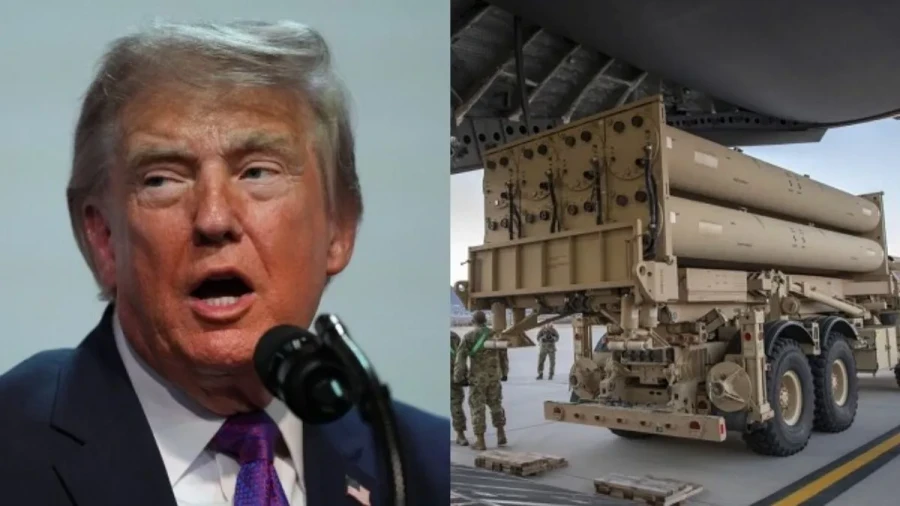
A significant revelation has emerged regarding the scale of American military involvement in the recent conflict between Israel and Iran, while according to a detailed report by The Washington Post, the United States exhausted nearly half of its entire stockpile of the advanced Terminal High Altitude Area Defense (THAAD) anti-missile system to safeguard Israel from Iranian missile barrages. This disclosure highlights the intense nature of the aerial warfare that took place in the Middle East and the heavy reliance on American defensive technology to maintain regional stability.
Massive Deployment of Interceptors
The report, citing American administrative officials, states that the United States launched more than 200 THAAD interceptors during the height of the hostilities. This figure represents approximately half of the total inventory currently held by the Pentagon, while the scale of this deployment underscores the severity of the threat posed by Iranian ballistic and cruise missiles. In addition to the land-based THAAD systems, the United States Navy played a crucial role from the Eastern Mediterranean Sea. Naval vessels stationed in the region fired more than 100 Standard Missile-3 (SM-3) and Standard Missile-6 (SM-6) interceptors to neutralize incoming threats before they could reach their targets.
Comparison with Israeli Defensive Actions
Interestingly, the report highlights that the United States took a more active role in missile interception than Israel itself in certain aspects. While the US fired over 200 THAAD interceptors, Israel utilized fewer than 100 Arrow interceptors and approximately 90 David's Sling interceptors. In total, the United States fired about 120 more interceptors than the Israeli Defense Forces, effectively doubling the defensive action taken against Iranian projectiles. Some of these interceptions were directed at less advanced projectiles launched by Iran-backed groups operating out of Lebanon and Yemen, further expanding the scope of the defensive umbrella provided by the US military.
Strategic Challenges and Future Risks
The depletion of such a significant portion of the THAAD stockpile has raised concerns within the American administration regarding future readiness. Officials have pointed out that if military actions against Iran were to resume, the US military might face a shortage of these critical interceptors. This concern is particularly relevant given the warnings issued by US President Donald Trump regarding potential future military escalations, while the report suggests that any further military engagement would require even more interceptors, putting additional strain on the Pentagon's remaining resources.
Context of the Conflict and Peace Efforts
The military action that led to this massive expenditure of resources began on February 28, 2026, when the United States and Israel launched joint operations against Iran. These strikes resulted in the deaths of several high-ranking Iranian leaders, including the then Supreme Leader Ayatollah Khamenei. During the course of the war, Iran also targeted American allies across West Asia. However, a ceasefire has been in effect since April 8, leading to a temporary cessation of hostilities. Currently, the United States and Iran are engaged in peace negotiations aimed at resolving a rivalry that has spanned more than four decades. The outcome of these talks will be crucial in determining whether the remaining defensive stockpiles will need to be utilized again in the near future.
