
- India,
- 16-Oct-2026 05:47 PM IST



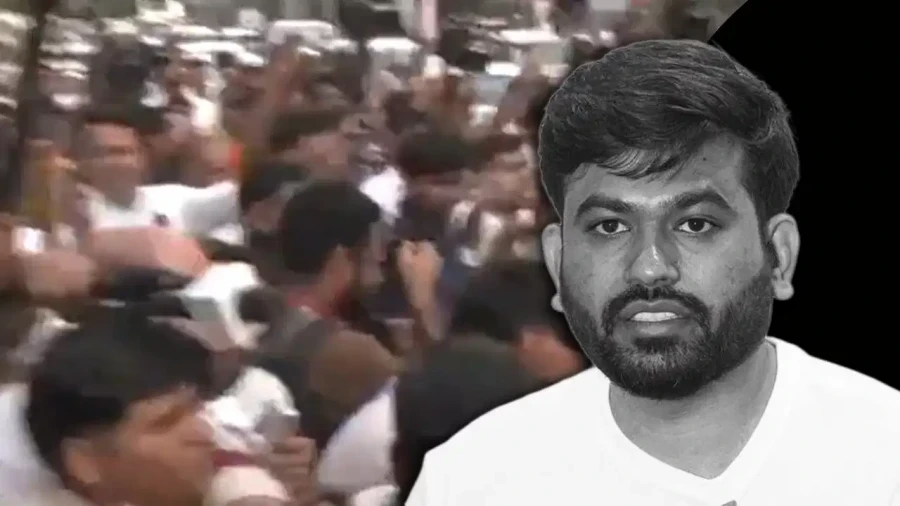
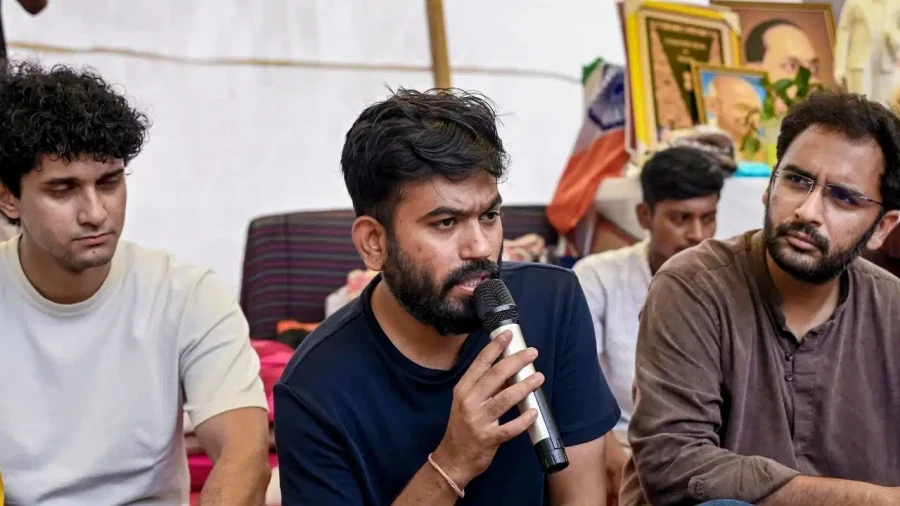
Delhi Police on Friday took Abhijeet Dipke into custody ahead of the proposed Tiranga March organised by the Cockroach Janta Party, commonly known as CJP. According to the police, Dipke was detained while he was attempting to make his way towards Connaught Place in central Delhi. Prior to taking him into preventive custody, the Delhi Police had specifically requested Abhijeet Dipke to call off the demonstration and avoid holding the Tiranga March without official authorization.
Earlier in the day, a team of Delhi Police officers arrived at Dipke's temporary accommodation in the Jhandewalan area, which belongs to his friend, to formally deliver a notice instructing him not to proceed with the march without necessary permissions. Police officials stated that between 15 and 20 personnel visited the residence to serve the official notice regarding the Lehra Do Tiranga march. Authorities informed him that Section 163 of the Bharatiya Nagarik Suraksha Sanhita, or BNSS, had already been promulgated around Central Park, prohibiting unauthorized gatherings and assemblies in the area.
High Alert and Security Arrangements Across New Delhi
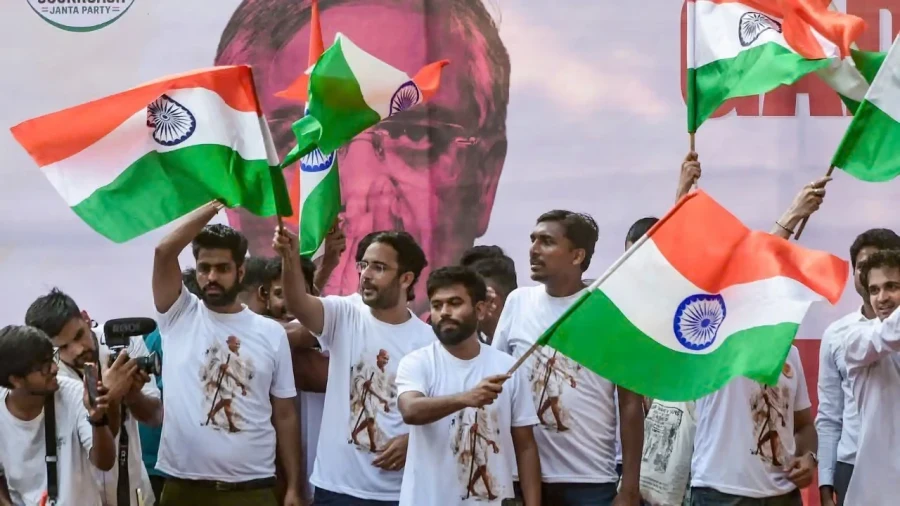
Following the call for the protest march, security arrangements were substantially tightened around Central Park and adjoining areas of Connaught Place. Delhi Police personnel actively appealed to the general public to avoid visiting Central Park in view of the restrictions imposed under BNSS Section 163. Abhijeet Dipke had scheduled the Lehra Do Tiranga march for Friday evening at 5 PM at Central Park, alleging that CJP members Ashutosh Ranka and Sourav Das had been unlawfully imprisoned simply for unfurling the national flag. Also, demands were raised by Sourav Das and Abhishek seeking the removal of Chief Election Commissioner Gyanesh Kumar.
In response to the demonstration call, the New Delhi Municipal Council, known as NDMC, ordered the complete closure of Central Park for two consecutive days, specifically Friday and Saturday, dated 16 October and 17 October, barring entry to the general public. To maintain strict law and order across the New Delhi district, the administration deployed over 6000 Delhi Police personnel alongside 220 companies of the Central Armed Police Forces, commonly known as CAPF, accompanied by an extensive network of CCTV cameras.
Extensive Deployments and Traffic Barricades
Stringent security measures were implemented at multiple vulnerable and high-footfall locations across the national capital, including Connaught Place, Rajiv Chowk, Central Park, Jantar Mantar, Palika Bazar, nearby metro stations, and sensitive zones across Lutyens' Delhi. Multiple layers of police barricades were erected at major transit points, including Connaught Place, Patel Chowk, ITO, and Parliament Street. A senior police officer confirmed that in addition to the on-ground deployment, an extra reserve force of over 5000 personnel from other police districts had been kept on standby to prevent any breach of peace.
The 220 CAPF companies assigned for New Delhi duties were tasked with monitoring border sectors, neighbouring districts, and vital installations. With each CAPF company comprising roughly 100 personnel, security operations were organised into 3 shifts throughout the day, with 30 CAPF companies actively deployed in each shift. Authorities planned further reinforcements if crowds gathered late into the night.
Supreme Court Declines Urgent Hearing on Park Closure
The sudden closure of Central Park on 16 and 17 October by the NDMC led to a legal challenge before the Supreme Court of India. A petition was moved before the apex court seeking an urgent hearing against the administrative decision to shut down the iconic public space. However, a Supreme Court bench comprising Chief Justice of India Justice Surya Kant and Justice Joymalya Bagchi declined to grant an urgent listing for the matter, noting that they hoped good sense would prevail among all parties involved.
The bench observed that during these days, small shopkeepers depend on their daily earnings for their livelihood, expressing an understanding of the immense hardship and difficulty faced by entire families due to such disruptions. Justice Bagchi highlighted the conflicting interests involved in the matter, stating, "Someone wants to protest, someone wants to sell 'peanuts', and someone wants to maintain law and order. " He remarked that if substantial commercial loss takes place, the court reserves the power to exercise its constitutional jurisdiction. Counsel appearing for the petitioner highlighted that the NDMC issued the closure order late on Thursday night, making commercial trade virtually impossible. Indicating that the court retains full authority to intervene if the restrictions turn out to be disproportionate, the bench indicated that the petition could potentially be listed for hearing on 26 or 27 October.