

- India,
- 27-Nov-2025 11:07 PM IST


The Assam Legislative Assembly on Thursday passed the Assam Prohibition of Polygamy Bill, 2025, marking a significant legislative step in the state. Once this bill receives the Governor's assent, it will officially become law, making the practice of marrying more than one person a criminal offense within Assam, while while the exact date of its implementation is yet to be announced, the passage of this bill signals a strong commitment from the state government to curb polygamy and empower women's rights.
Key Provisions and Penalties
Under the new bill, any individual who enters into a second marriage while their previous marriage is still legally valid or has not been dissolved will be deemed to have committed an offense. The penalties for such an act include imprisonment for up to 7 years, along with a monetary fine. Also, the law stipulates a provision for compensation of 1. 40 lakh rupees to the victim, aiming to provide financial relief and support to those affected by polygamy. If an individual conceals their existing marriage to enter into another, the punishment becomes even more severe, potentially leading to up to 10 years in jail and a fine. The bill also includes a clause that doubles the punishment for repeat offenders, acting as a strong deterrent against recurrent violations.
Exemptions and Rationale
It's important to note that the new law won't be uniformly applied across all regions and communities within Assam. The bill explicitly states that it won't be applicable to the Sixth Schedule areas and Scheduled Tribes. The government's rationale behind these exemptions is to respect the. Local customs and traditional practices prevalent in these specific regions. These communities often have distinct social and cultural norms that have been acknowledged and preserved through this provision. This ensures that while the state moves towards broader social reform, it also remains sensitive to the unique cultural identities of its indigenous populations.
Impact on Public Life
The consequences of violating the Prohibition of Polygamy Bill extend. Beyond just imprisonment and fines, Importantly impacting an individual's public life. Those found guilty under this law will be disqualified from holding government jobs. On top of that, they will be barred from contesting local body elections, effectively preventing them from holding any public office. These provisions are designed to ensure that individuals who flout the law don't occupy positions of public trust or authority, thereby reinforcing the importance of adhering to the new legal framework and promoting a sense of accountability among citizens.
Strengthening Women's Rights
The Assam government has emphasized that this legislation is a crucial step towards strengthening women's rights in the state. According to the government, women are often the most vulnerable and suffer the greatest harm in cases of polygamy, while this law has been meticulously drafted to ensure their safety, dignity, and respect. The bill is hailed as a decisive measure aimed at fortifying women's rights, legally securing the family system, and ushering in significant social reforms across the state. By providing legal recourse and protection, the law seeks to elevate. The status of women and ensure their well-being within marital relationships.
Chief Minister's Stance on Islam and Polygamy
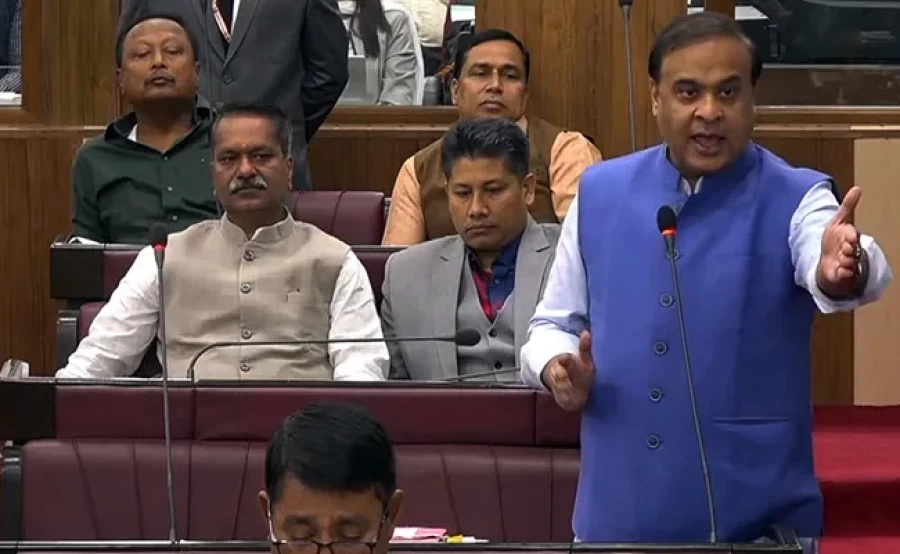
During the debate on the bill, Chief Minister Himanta Biswa Sarma appealed to opposition parties to withdraw their proposed amendments. He clarified that the bill isn't against Islam, while the Chief Minister stated, “Islam can't promote polygamy. If this bill is passed, you will get an opportunity to be a true Muslim. This bill isn't against Islam. True Islamic people will welcome this Act. ” He further cited examples of countries like Turkey, which have banned polygamy, and mentioned Pakistan's arbitration council, which regulates the practice, while these statements aimed to underscore that the legislation is a social reform measure, not an attack on any particular religion, and that it aligns with progressive interpretations of religious practices globally.
Future Legislative Agenda: UCC and Love-Jihad
Chief Minister Himanta Biswa Sarma also outlined his future legislative agenda for the state following the passage of this bill. He declared, “If I come back to the Assembly as. Chief Minister, I will bring UCC in the first session. I give you my commitment that I will bring UCC in Assam. ” Earlier this month, the Chief Minister had also announced the government's intention to ban 'love-jihad' and introduce a bill against deceptive marriages by the end of February. Sarma stressed that this bill marks the beginning of a major legal reform in Assam, drawing parallels with other states. That have initiated work on a Uniform Civil Code (UCC), such as Uttarakhand, whose assembly has already passed a UCC bill. This indicates a broader vision for legal harmonization and social change in the state.
Political Reactions and Debates
The bill elicited varied reactions from political leaders, while assam Minister Jayant Malla Barua lauded the bill as essential, stating that the Assembly had made a significant decision to ensure every woman lives with dignity. He termed it a major step towards women's empowerment under the Chief Minister's leadership. In contrast, Debabrata Saikia, Leader of Opposition in the Assam Assembly, cited the Supreme Court's view that polygamy isn't an essential part of religion. He also referenced the National Family Health Survey, suggesting that polygamy is more prevalent among Christians and tribals in Assam than among Muslims. AIUDF MLA Aminul Islam criticized the bill, claiming it violates several constitutional rules and interferes with the personal choices of Muslims, while independent MLA Akhil Gogoi alleged that CM Sarma introduced the law for communal polarization ahead of next year's state elections. CPI(M) MLA Manoranjan Talukdar called for the bill to be sent to a select committee for detailed clause-by-clause discussion and argued that it should apply to all communities without exemptions. He also raised concerns about increased police powers, which could be misused.
Polygamy in India: A Broader Context
Polygamy in India isn't exclusively practiced by Muslims but is also observed in other religious groups. Within the Muslim community, Sharia and Muslim Personal Law permit up to four marriages under stringent conditions. The Quran allows this practice with strict stipulations, including the requirement to treat all wives equally. However, Assam's new law marks a significant social and legal shift by criminalizing this practice within the state, while this bill represents a crucial step towards a more uniform social code in the state, promoting equal rights and responsibilities for all citizens. The passage of this bill is poised to bring about a substantial transformation in Assam's social fabric, strengthening the position of women and fostering greater stability within family structures. It symbolizes the dawn of a new era in the state, prioritizing social justice and equality.
