
- India,
- 05-Jun-2026 07:03 PM IST



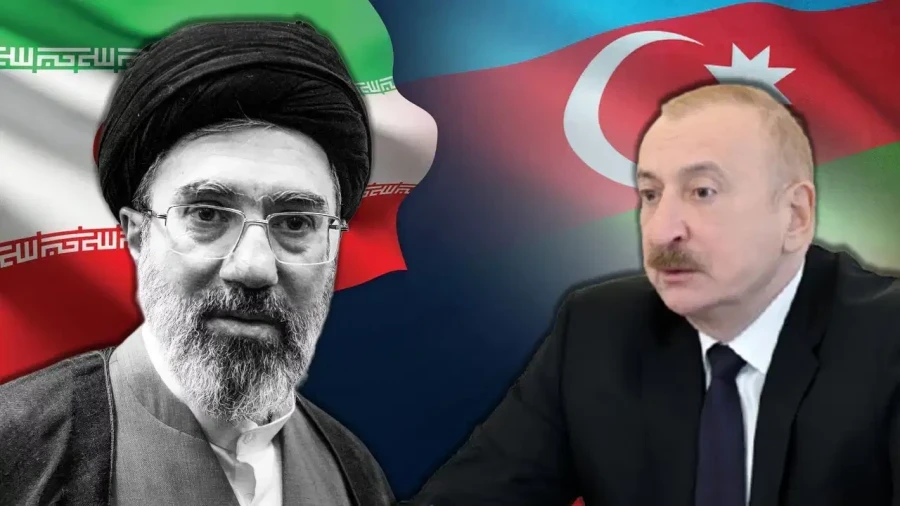
In a significant revelation concerning Middle Eastern geopolitics, it has emerged that while Iran viewed Gulf nations such as the United Arab Emirates, Kuwait, Bahrain, and Saudi Arabia as its primary adversaries during its conflict with the United States and Israel, a neighbor was providing critical support to its enemies. Azerbaijan, which shares a 689 kilometer border with Iran, reportedly allowed Israel to establish multiple military and intelligence bases on its territory to facilitate operations against the Islamic Republic.
Strategic Military Presence Near Tabriz
According to reports, Israel established several military outposts within Azerbaijan's borders. One of the most strategically significant bases was located approximately 60 kilometers from the Iranian city of Tabriz. This proximity allowed Israeli forces to conduct various strikes and intelligence-gathering missions directly against Iranian targets. The base served as a launchpad for multiple attacks, highlighting the depth of the military cooperation between Baku and Tel Aviv that remained hidden from public view for a long time.
Assassination of IRGC Intelligence Chief
The most high-profile operation linked to these Azerbaijani bases was the assassination of Rahman Moghaddam, the intelligence chief of the Islamic Revolutionary Guard Corps (IRGC). The operation was reportedly managed and executed from the base located on Azerbaijani soil. This revelation underscores the tactical advantage Israel gained by having a presence so close to the Iranian border, enabling them to target high-ranking officials with precision.
Coup Preparations and Intelligence Operations
Beyond direct military strikes, Israel utilized Azerbaijan as a staging ground for potential political upheaval within Iran. Reports from CNN indicate that Israel deployed intelligence officers to Azerbaijan to prepare for a possible coup. The Israeli leadership anticipated that the assassinations of top Iranian figures, including Supreme Leader Ayatollah Ali Khamenei and Ali Larijani, would trigger mass public protests and civil unrest. Although these high-level assassinations occurred, the expected public uprising didn't materialize, and the Iranian populace didn't take to the streets as Israel had envisioned.
Deployment of Elite Forces and Advanced Weaponry
The scale of the Israeli presence in Azerbaijan was substantial. Citing two officials, the reports claim that dozens of Israeli personnel were stationed on Azerbaijani soil. This contingent included members of Israel's special operations forces, elite helicopter-based combat units, rescue forces, and personnel from the intelligence agency Mossad. These forces were supported by a secret network that transported drones and lethal weaponry into the region. The deployment of these Israeli troops reportedly began as early as January 2026, indicating a long-term strategic plan.
Azerbaijan's Official Stance and Denials
The revelation of these secret bases stands in stark contrast to the official diplomatic position maintained by Azerbaijan, while during the conflict, Azerbaijan's Foreign Minister, Jeyhun Bayramov, had publicly stated that Baku would never allow its land to be used as a platform for attacks against any third country, including Iran. Despite these assurances, the evidence suggests a significant breach of this neutrality. In response to the recent reports, a spokesperson for the Azerbaijani embassy in the United States firmly rejected the claims, describing them as baseless and denying that Azerbaijani territory was used for operations against third parties. On top of that, context from the New York Times suggests that Israel also utilized a base near Baghdad for ground operations, further illustrating the multi-front strategy employed against Iran.