

- India,
- 29-Apr-2026 07:14 AM IST


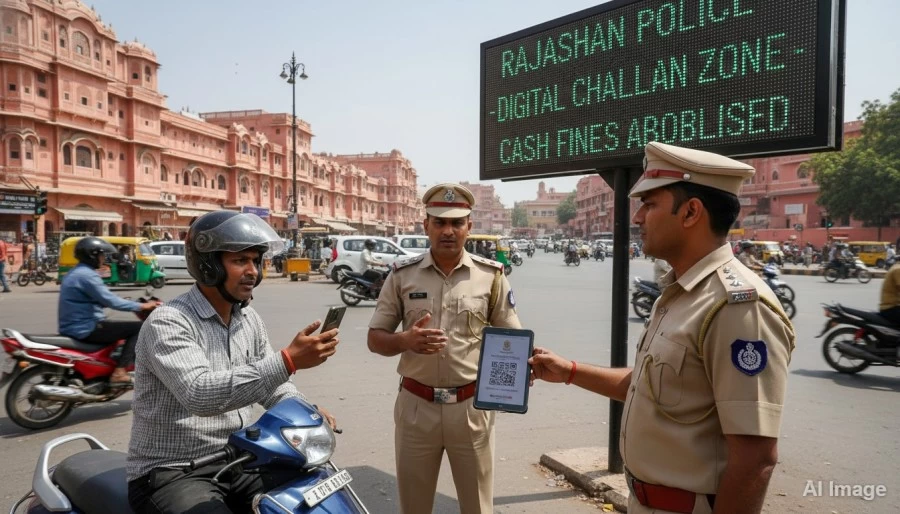
In a significant move to enhance transparency, the state government in Jaipur has issued a gazette notification transforming the traffic challan system into a fully digital framework, while under this new mandate, the entire process—from the issuance of a challan and payment of the fine to challenging the penalty—will be conducted exclusively through digital channels. This initiative aims to provide greater convenience to the public while ensuring strict accountability within the system.
End-to-End Digital Process
The new regulations ensure that every step taken following a traffic violation is recorded digitally. This shift is expected to clarify the responsibility for on-the-spot actions and assist in streamlining the overall enforcement process. By moving the entire lifecycle of a challan online, the government seeks to eliminate manual intervention and make the system more user-friendly for citizens who wish to address their traffic violations remotely.
Authorized Enforcement Officers
The notification clearly defines the hierarchy of officers authorized to take action against traffic rule violations. According to the order, officers of the rank of Motor Vehicle Sub-Inspector or above from the Transport and Road Safety Department are empowered to issue challans. Also, from the Rajasthan Police, officers holding the rank of Head Constable or above have been authorized to carry out these enforcement duties.
Dedicated Portals and Abolition of Cash
To facilitate the digital transition, the government has designated specific online platforms, while ' All procedures related to traffic penalties must be completed through these portals. Crucially, the payment of fine amounts has been made mandatory through these digital means, effectively putting an end to cash transactions on the spot.
This systemic overhaul is designed to curb corruption and bring absolute transparency to traffic law enforcement. By mandating the use of digital portals, the state ensures that every transaction and action is logged, leaving no room for unauthorized cash dealings or procedural discrepancies.
