

- India,
- 29-Apr-2026 07:21 AM IST


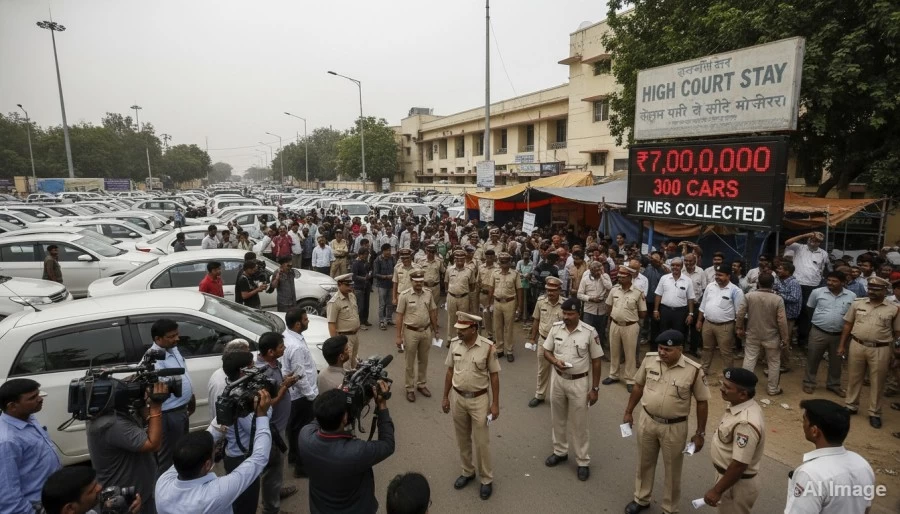
Serious questions have been raised regarding the operations of the Jaipur RTO First flying squads, which are reportedly under intense pressure to meet revenue targets. Ignoring established regulations for vehicles registered in other states, the department has been issuing challans under the guise of One Time Tax (OTT). However, the amounts collected have been officially recorded as 'compounding fines' rather than tax, while this administrative maneuver is placing a double financial burden on vehicle owners. Investigations reveal that during the financial year, approximately ₹7 crore was collected from more than 300 cars. While this money was intended to be tax, its classification as a fine means owners may be forced to pay OTT again if they choose to register their vehicles in Rajasthan later. The highest frequency of such actions was recorded during the months of February and March.
High Court Stay and Regulatory Violations
The High Court had placed a stay on the collection of One Time Tax from vehicles registered in other states starting July 2025. The court explicitly stated that the government must issue a new notification to resume tax collection; however, no such notification has been issued to date. In several departmental actions, while the standard fine amounts to ₹25,000 to ₹30,000, sums ranging from ₹1 lakh to ₹3 lakh were collected. These amounts actually correspond to OTT rates rather than judicial fines. Consequently, the previously deposited amounts won't be adjusted against future taxes, leading to significant financial losses for vehicle owners.
Official Responses from RTO Authorities
RTO First officials have provided varying explanations for these actions, while nathu Singh, DTO (Enforcement), stated that verification is being provided to car owners from whom OTT amounts were taken as fines. He claimed that if these owners register their vehicles in Rajasthan in the future, the amount will be adjusted. On the other hand, Rajendra Shekhawat, RTO First, maintained that the High Court's decision against tax collection applied only to specific individual cases. He argued that for owners wishing to register their cars in the state, the amount was deposited as OTT, while for those not seeking registration, it was taken as a fine under special circumstances from certain owners.
