
- India,
- 08-Jul-2026 04:17 PM IST



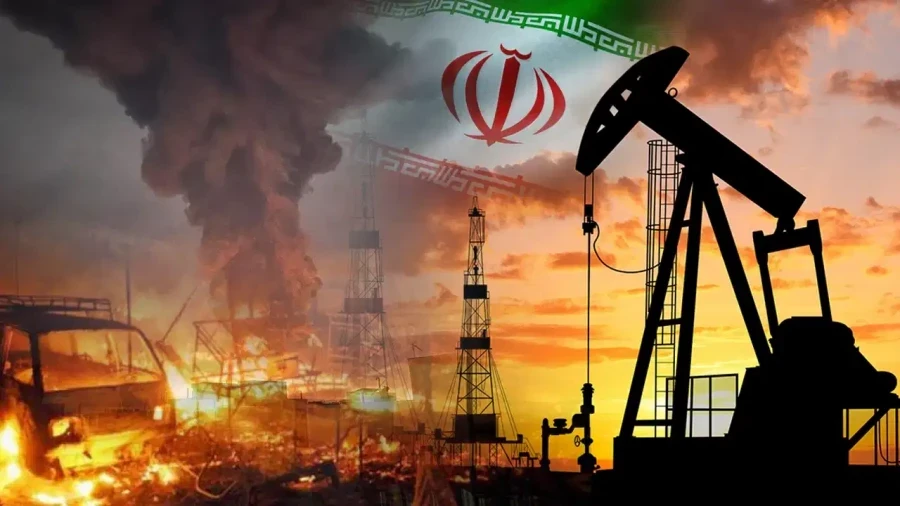
The geopolitical landscape has shifted dramatically as the flames of war between the United States and Iran have been reignited, sending shockwaves through the international energy market. During the NATO summit held in Ankara, the capital of Turkiye, US President Donald Trump made a significant announcement stating that the ceasefire agreement previously reached with Iran has now officially ended, while trump clarified that the United States no longer has any desire to enter into a new agreement with Iran, emphasizing that the primary objective of the US is to completely dismantle Iran's nuclear program. This escalation follows recent military actions where the US military conducted airstrikes on more than 80 Iranian military installations. According to US officials, these strikes were a direct response to attacks on vessels in the strategic Strait of Hormuz, a critical chokepoint for global oil transit.
Impact on Global Crude Oil Prices
The immediate consequence of this renewed conflict has been a sharp spike in crude oil prices across international markets. Brent crude prices surged by approximately 6 percent, climbing past the 78 dollar per barrel mark. Similarly, West Texas Intermediate (WTI) crude saw a significant rise of about 5 point 8 percent, trading above 74 point 47 dollars per barrel. This sudden volatility has raised fears of a deepening global oil crisis, with experts warning that prices could reach unprecedented levels if supply chains are further disrupted by the ongoing hostilities. The situation has prompted nations worldwide to reassess their energy security and the adequacy of their strategic reserves.
India's Oil Reserve Status and Preparedness
In light of these developments, the question of India's preparedness for a potential oil shock has become paramount. According to a report released on July 3, 2026, by the commodity intelligence firm Kpler, India's crude oil reserves have reached their highest level in nearly a year. This surge is attributed to record-breaking imports of crude oil during the month of June. By the end of June, the total volume of crude oil stored in India's strategic reserves, commercial facilities, and refineries had risen to 104 million barrels. Currently, India maintains an underground Strategic Petroleum Reserve (SPR) with a total capacity of 5 point 33 million metric tons. This is equivalent to approximately 39 million barrels of crude oil, which alone can meet India's oil requirements for about 8 days. Given that India consumes roughly 5 million barrels of oil daily, the total stock of 104 million barrels is estimated to cover the nation's needs for approximately 21 days.
Detailed Breakdown of Indian Reserves
India's energy security strategy relies on a combination of strategic and commercial stocks. According to a report from Angel One, the Indian Strategic Petroleum Reserves Limited (ISPRL) manages underground caverns located in Visakhapatnam, Mangalore, and Padur. These facilities hold 5 point 33 million metric tons of crude oil, providing a safety net for 9 point 5 to 12 days of national requirement. Beyond these strategic reserves, the country's oil refineries and depots maintain a commercial rolling stock of petroleum products, including petrol, diesel, and Aviation Turbine Fuel (ATF). This commercial stock typically covers about 50 to 60 days of demand, ensuring a continuous supply even during short-term disruptions.
Global Comparison of Oil Reserves
When compared to other major global powers, the scale of oil reserves varies Notably, while according to a report from Al Jazeera in March, China holds the world's largest strategic oil reserve. While China doesn't officially release its data, energy analysis firm Vortexa estimated that by the end of 2025, China's onshore crude oil reserves had reached approximately 1 point 13 billion barrels. The United States maintains a government strategic oil reserve of 415 million barrels. Japan possesses an emergency oil reserve of about 470 million barrels, which is capable of meeting its domestic needs for a staggering 254 days. Meanwhile, the United Kingdom holds a strategic reserve of approximately 38 million barrels of crude oil and 30 million barrels of refined petroleum products, sufficient to sustain the country for about 90 days. As the US-Iran conflict continues to unfold, these reserves will be the primary defense against a global energy catastrophe.