
- India,
- 16-May-2026 09:34 PM IST



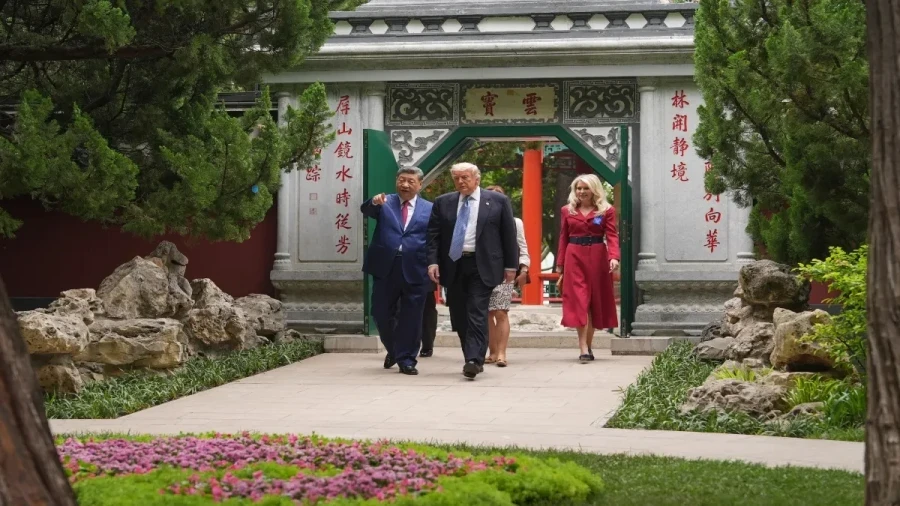
In a dramatic display of diplomatic caution and cybersecurity protocol, US President Donald Trump and his entire delegation reportedly discarded every gift and souvenir received during their recent two-day state visit to China. The incident occurred just as the American team was preparing to depart from Beijing, highlighting the deep-seated mistrust and ongoing espionage concerns that define the relationship between the world's two largest economies. While the visit included high-level discussions with Chinese President Xi Jinping, the departure was marked by a symbolic and literal dumping of Chinese-provided items into trash bins located near the stairs of Air Force 1.
Trade Agreements and Empty Hands
President Trump arrived in Beijing with high expectations of securing significant agreements on trade and rare minerals. While some progress was made, including deals involving soybeans and Boeing aircraft, the overall sentiment was that the delegation returned largely empty-handed regarding broader structural changes. On Friday, as the President and his team prepared to leave on Air Force 1, it became clear that they wouldn't be bringing any physical mementos of the trip back to Washington. This included not only official gifts but also items provided to the White House staff and the accompanying press corps.
The Trash Can Incident
The specifics of the event were brought to light by Emily Goodin, a White House correspondent for the New York Post, while according to her reports, the American delegation took everything given to them by Chinese officials—including identification badges, burner phones issued to White House staff, press invitations, and various souvenirs—and collected them in a heap. Before ascending the stairs to the presidential aircraft, these items were unceremoniously dumped into a trash can placed at the base of the steps. The directive was clear: nothing obtained in China was permitted to be brought onto the sovereign territory of Air Force 1.
Cybersecurity and Espionage Concerns
The primary motivation behind this drastic measure was the fear of sophisticated Chinese espionage. US intelligence agencies have long warned that electronic devices, and even seemingly innocuous items like badges or pins, can be embedded with tracking chips or listening devices. Before departing for Washington, President Trump openly acknowledged the reality of the situation, stating that the US and China actively engage in spying on one another. This awareness led to unprecedented precautions, while members of the delegation, which notably included high-profile tech leaders like Nvidia CEO Jensen Huang and Elon Musk, had reportedly left their personal electronic devices back in the United States to prevent potential hacking or data theft during their stay in Beijing.
A Longstanding Diplomatic Strategy
While the public nature of this incident was striking, such tactics aren't entirely new for US delegations visiting China. For generations, American officials have practiced extreme caution when operating within Chinese borders, often assuming that every room is bugged and every gift is a potential security risk. However, the collective act of discarding all items in a visible trash can served as a powerful statement regarding the current state of US-China relations. The move underscores the reality that despite formal diplomatic engagements and trade discussions, the underlying tension regarding national security and technological supremacy remains a dominant force in international affairs.