
- India,
- 25-Sep-2026 12:11 PM IST



Nepal's Prime Minister Balen Shah delivered a comprehensive address at the 81st session of the United Nations General Assembly (UNGA) on Thursday, emphasizing the urgent need for global climate action. During his speech, he highlighted the devastating impact of climate change on mountainous nations and called for a more solid framework of international cooperation. A central theme of his address was the proposal for a 'Himalayan Climate Resilience Mechanism,' an initiative intended to be led by Nepal, India, and China to safeguard the fragile ecosystem of the Himalayas.
Gratitude for Immediate Disaster Assistance
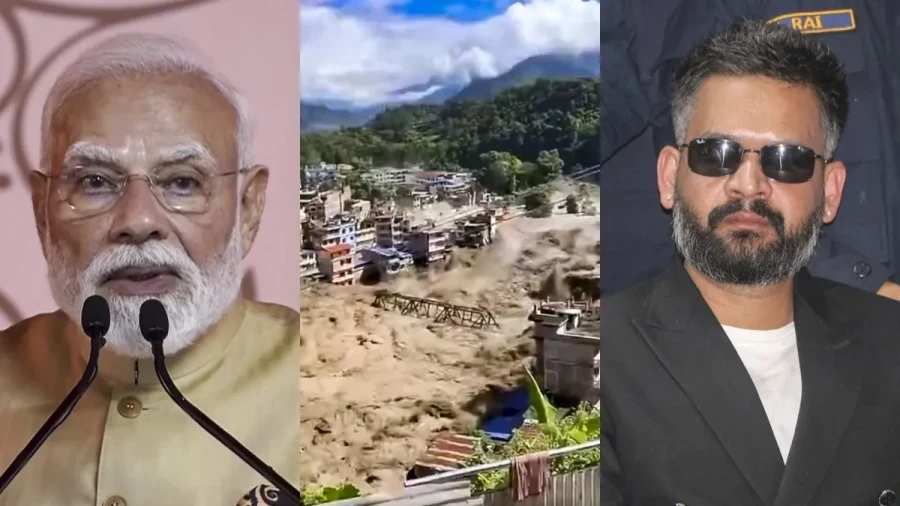
Prime Minister Balen Shah took a moment to formally thank the international community for their support during recent natural disasters in Nepal. He specifically referenced the Bhote Koshi-Trishuli disaster, characterizing it as more than just a local tragedy, while according to Shah, this event served as a global warning about the escalating climate crisis. He posed a poignant question to the assembly, asking whether the global community has truly heeded that warning, while he expressed deep gratitude to Nepal's immediate neighbors, India and China, for their swift and generous assistance in the aftermath of the floods. He also acknowledged the contributions of other friendly nations, the United Nations system, humanitarian agencies, and philanthropic organizations that stood by Nepal during its time of need.
The Proposal for a Himalayan Climate Resilience Mechanism
In a significant move toward regional environmental security, Balen Shah proposed the creation of the Himalayan Climate Resilience Mechanism, while he envisioned this mechanism as a collaborative effort led by Nepal, India, and China. The proposal includes several technical and strategic components aimed at mitigating climate risks, while shah called for the sharing of satellite data and expertise among the three nations to better understand environmental shifts. He also emphasized the need for the joint monitoring of dangerous glacial lakes, which pose a significant threat of outburst floods. Plus, he urged the strengthening of joint early warning systems to protect communities on both sides of the borders. He stated that when disasters strike, assistance should be coordinated across borders, turning the Himalayas into a laboratory for international cooperation rather than a boundary of fragmented information.
Climate Justice and Global Responsibility
Addressing the broader issue of climate justice, Prime Minister Shah appealed to nations with a greater historical contribution to climate change and higher capacity to act, while he reminded the assembly that the international community has already agreed to the principle of 'common but differentiated responsibilities and respective capabilities' through the United Nations Framework Convention on Climate Change. He argued that those who have contributed most to the problem must take greater responsibility in solving it. For Nepal, he noted, the climate disaster isn't just a humanitarian issue but a development emergency that threatens the future of its people.
The Importance of the Hindu Kush-Himalaya Region
Shah underscored the global significance of the Hindu Kush-Himalaya region, noting that it's home to nearly 2 billion people. He explained that these mountains provide essential resources such as water, ecosystem services, agriculture, and employment to populations far beyond Nepal's borders. He described the Himalayas as a vital part of the planet's life-support system rather than just a geographical feature. In addition to his calls for international action, Shah highlighted Nepal's own environmental efforts, pointing out that the country has successfully restored forests in nearly half of its total land area. He concluded by stating that climate justice must be more than a beautiful phrase in UN documents; it must provide the people of his country the opportunity to build their future instead of constantly rebuilding their past.