
- India,
- 21-May-2026 11:54 AM IST



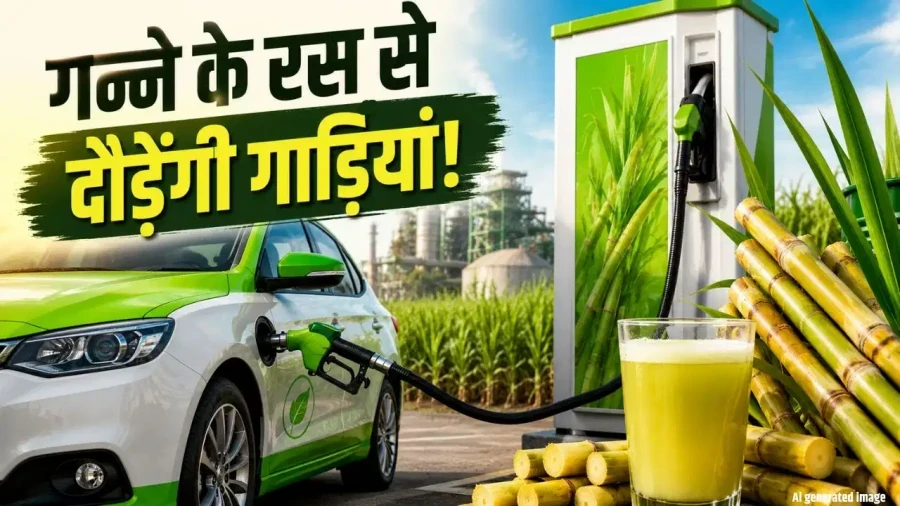
The landscape of the Indian automobile industry is on the verge of a significant transformation as the government pushes for the adoption of Flex-Fuel vehicles. This move aims to replace traditional petrol and diesel with ethanol derived from sugarcane juice and maize. However, this revolutionary shift faces a critical hurdle. Major automobile manufacturers have placed a significant condition before the government, stating that the transition will only be successful if high-ethanol fuels like E85 and E100 are priced substantially lower than conventional petrol. Also, the industry is seeking relief in the form of Goods and Services Tax (GST) concessions to make these new vehicles attractive to the general public.
Understanding E85 and E100 Fuels
To comprehend the shift, it's essential to understand the fuel compositions being discussed. E85 refers to a fuel blend containing 85 percent ethanol and 15 percent petrol. On the other hand, E100 represents 100 percent pure ethanol. Recent discussions involving the Ministry of Petroleum, oil marketing companies, and the Society of Indian Automobile Manufacturers (SIAM) have highlighted a crucial reality: simply introducing the technology won't guarantee sales. The industry argues that consumers will only switch to Flex-Fuel vehicles if there is a clear economic advantage at the fuel pump, while one of the primary technical challenges is that ethanol has a lower energy density compared to petrol. This means that a vehicle running on ethanol might provide slightly lower mileage. To compensate for this loss in efficiency, the price of ethanol must be kept low enough to ensure that the cost per kilometer for the consumer remains competitive.
The Brazil Model and Technical Challenges
Automobile companies have pointed towards Brazil as a successful example of ethanol adoption. In Brazil, ethanol is Notably cheaper than petrol, which has led to a massive surge in the purchase of Flex-Fuel vehicles. In India, the industry believes that unless customers see direct savings in their fuel bills, they will likely continue using E20 fuel, which contains only 20 percent ethanol. Beyond fuel prices, the transition to high-ethanol fuels requires substantial technical modifications. Standard engines can't handle high concentrations of ethanol; Because of this, manufacturers must redesign engine components and fuel systems. These upgrades inevitably increase the manufacturing cost of the vehicles. To offset this additional financial burden, the industry has requested the government to implement a significant reduction in GST.
Taxation and Market Sensitivity
Currently, Flex-Fuel vehicles are subject to the same tax bracket as traditional petrol and diesel cars, with GST rates ranging from 18 to 40 percent. Industry leaders, including those from Hero MotoCorp, emphasize that in a price-sensitive market like India, initial tax incentives are vital for the adoption of new technology. While the government has been hesitant to slash taxes on cars to avoid direct competition with electric vehicles, which enjoy a low 5 percent GST rate, there is more optimism for policy relief in the two-wheeler segment. The government's push for Flex-Fuel is driven by the urgent need for energy security. India currently imports nearly 90 percent of its crude oil requirements, spending over 120 billion dollars in foreign exchange annually. A large portion of this oil comes from West Asia, a region often affected by geopolitical tensions and conflicts.
Energy Security and Future Outlook
The transport sector is the largest consumer of fuel in India, accounting for 95-98 percent of petrol demand and 65-70 percent of diesel demand. By shifting to ethanol, India can Notably reduce its reliance on expensive imports and save billions of dollars. The Bureau of Indian Standards (BIS) has already issued technical standards for high-ethanol blends ranging from E22 to E30. Major players like Maruti Suzuki, Toyota, Tata Motors, Bajaj, and Honda have already showcased their Flex-Fuel prototypes. Maruti Suzuki management has confirmed that the industry is ready to comply with the new standards. On the production side, India's ethanol capacity has reached nearly 20 billion liters, far exceeding the current demand of 11 billion liters. However, environmental experts from NITI Aayog have raised concerns about the high water consumption required for sugarcane-based ethanol, while they suggest a shift towards second-generation ethanol produced from agricultural waste to maintain ecological balance while achieving energy independence.