
- India,
- 08-Jun-2026 06:01 PM IST



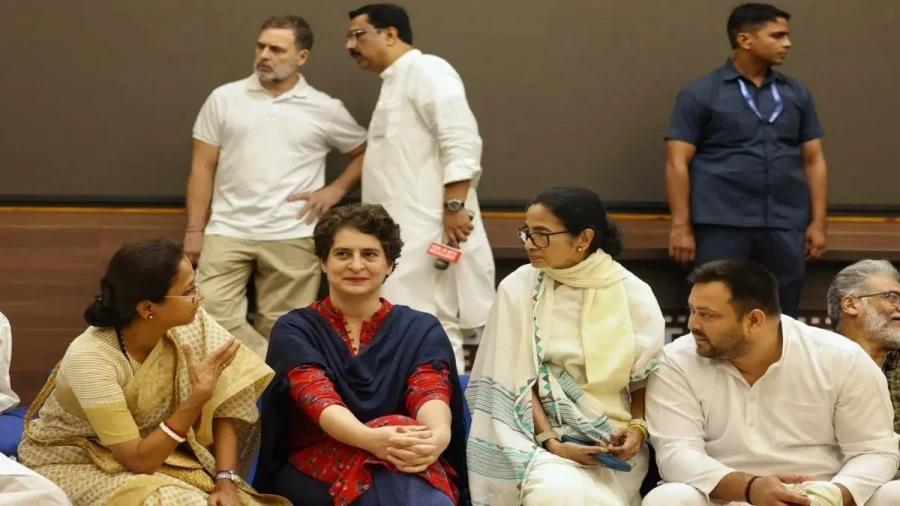
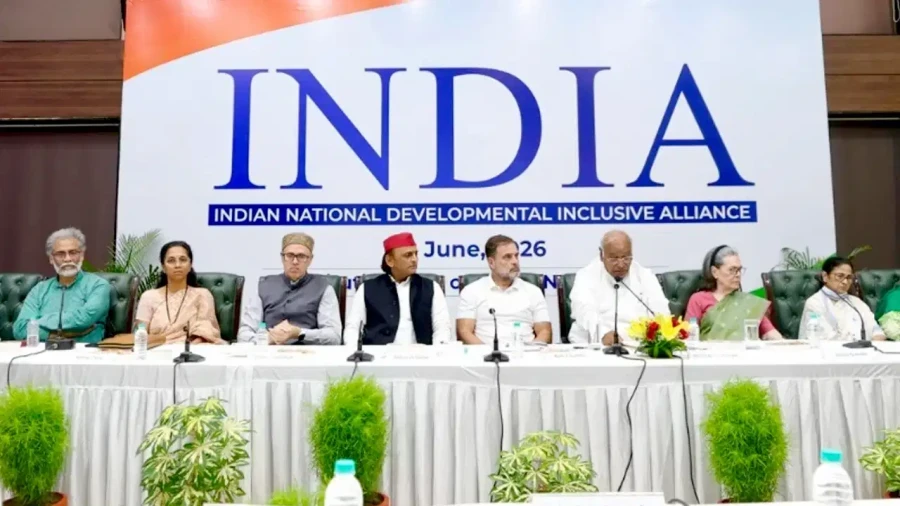
In a significant political development, the INDIA alliance held a crucial meeting where 25 constituent parties reached a consensus on five major issues. Following the deliberations, Congress President Mallikarjun Kharge addressed the media, outlining the roadmap for the opposition's future strategy. He announced that the alliance would meet every 2 months to maintain momentum and coordination, with the next high-level meeting scheduled to take place in Hyderabad on August 8. The meeting saw participation from a wide spectrum of opposition leaders, including Uddhav Thackeray and Hemant Soren, who joined the proceedings virtually to share their perspectives and endorse the collective decisions.
Five Key Resolutions of the INDIA Alliance
The meeting culminated in the adoption of five specific resolutions aimed at challenging the current administration's policies. Firstly, the alliance decided to send a formal letter to the Chief Justice of India (CJI) regarding the Special Intensive Revision (SIR) process. The opposition expressed grave concerns over the alleged manipulation of voter lists and raised serious questions about the fairness of elections. This letter is expected to be submitted to the CJI shortly, seeking judicial oversight on electoral integrity. Secondly, the alliance unanimously demanded the immediate resignation of Education Minister Dharmendra Pradhan. This demand stems from the recent controversies surrounding the NEET-UG and CBSE examinations, which the alliance claims have betrayed the trust of millions of students across the country.
Economic Concerns and Parliamentary Coordination
The third major point of agreement involves a demand for the central government to convene an all-party meeting to discuss the deteriorating economic situation. The alliance highlighted rising unemployment, inflation, and the plight of farmers as critical issues that require immediate national attention. Fourthly, the alliance formalized its internal structure by committing to bimonthly meetings, ensuring that the next gathering in Hyderabad serves as a platform for further consolidation. Finally, the parties agreed to maintain strict parliamentary coordination during the upcoming Monsoon session, while to facilitate this, coordination meetings will be held every morning at the office of the Leader of the Opposition, Mallikarjun Kharge, to ensure a unified front within the Parliament.
Political Challenges and National Issues
During the meeting, Kharge emphasized the unity shown by the alliance on April 17, 2026, when they collectively opposed the government's bills related to delimitation. He stressed the need to strengthen this spirit of unity to tackle the political, economic, and social challenges posed by what he termed as the government's misgovernance. The alliance raised concerns about the misuse of investigative agencies to intimidate political opponents and the alleged discrimination against non-BJP state governments. Plus, the leaders discussed the negative economic environment, the rise of private monopolies, and the crisis facing Micro, Small, and Medium Enterprises (MSMEs), while the alliance also criticized the government's foreign policy, stating that traditional values and strategic interests have been compromised.
Participating Parties and Political Context
The meeting was attended by a diverse group of 25 parties, including the Indian National Congress, Samajwadi Party, Trinamool Congress, Rashtriya Janata Dal, Jammu and Kashmir National Conference, Peoples Democratic Party, Jharkhand Mukti Morcha, Shiv Sena (UBT), Nationalist Congress Party (Sharad Pawar faction), CPI(M), CPI, CPI(ML) Liberation, Revolutionary Socialist Party, Indian Union Muslim League, Viduthalai Chiruthaigal Katchi, Marumalarchi Dravida Munnetra Kazhagam, Kerala Congress, Kerala Congress (M), Rashtriya Loktantrik Party, Bharat Adivasi Party, Lok Dal, All India Forward Bloc, and Shetkari Kamgar Paksh. Notably, this was the first meeting after the assembly elections in five states, marking the return of Mamata Banerjee to the alliance deliberations, while however, it was noted that the DMK has distanced itself from the alliance following the elections in Tamil Nadu.