
- India,
- 01-Jul-2026 08:15 AM IST



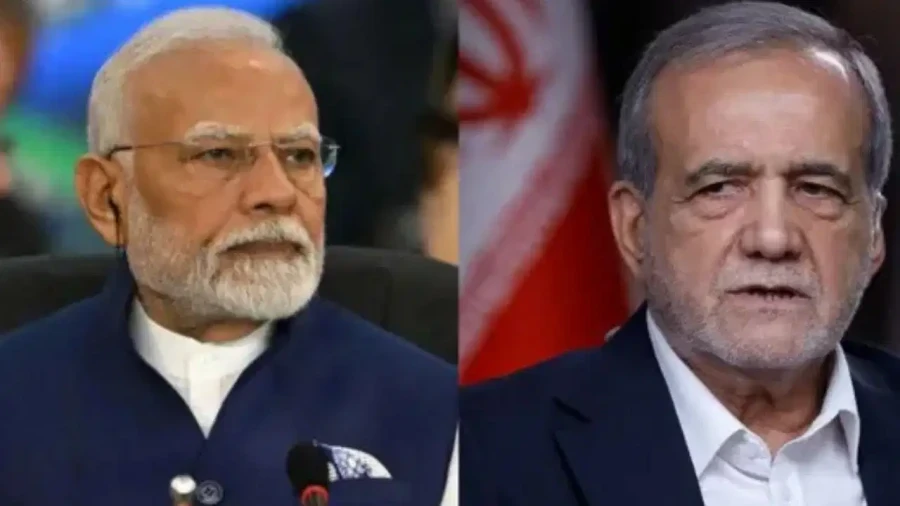
Prime Minister Narendra Modi on Tuesday engaged in a significant telephonic conversation with the President of Iran, Masoud Pezeshkian. During this high-level interaction, the two leaders delved deep into the prevailing situation in West Asia and discussed the potential future trajectory of the region. President Pezeshkian provided a comprehensive briefing to Prime Minister Modi regarding the recent developments in the West Asian landscape and outlined the path forward for the coming days.
Focus on Peace and Diplomacy
During the conversation, Prime Minister Modi expressed his appreciation for the ongoing efforts aimed at achieving a ceasefire and reducing tensions in the volatile region, while he reiterated India's long-standing position that all complex issues and conflicts should be resolved through the channels of dialogue and diplomacy. The Prime Minister emphasized that India has always believed that peace and stability in West Asia aren't merely regional requirements but are fundamental to the economic and strategic security of the entire world.
Strategic Importance of the Strait of Hormuz
A critical point of the discussion was the freedom of navigation in the Strait of Hormuz. Prime Minister Modi underscored the vital importance of ensuring unhindered maritime movement and the safety of global trade through this strategic waterway. He highlighted that the security of maritime routes is crucial for both India and the international community to maintain easy global trade operations. The Prime Minister shared these details through a post on his social media handle X, where he expressed hope that continuous efforts would lead to permanent peace in the region.
Strengthening Diplomatic Ties
This marks the second time Prime Minister Modi has spoken with the Iranian President since the onset of the current conflict. The diplomatic channels between the two nations remain active through various platforms, including direct discussions between heads of government, ministerial meetings, and interactions within the framework of BRICS. Plus, External Affairs Minister Dr. S. Jaishankar has been in constant touch with his Iranian counterpart, Abbas Araghchi, with more than 5 conversations recorded between them to monitor the changing situation.
Representation at Official Ceremonies
The conversation also touched upon official engagements between the two nations. Recently, Iran extended an invitation to Prime Minister Modi to attend the funeral program of Ayatollah Ali Khamenei. In response to this invitation, India has decided to send the Governor of Bihar to represent the country at the event. This gesture signifies the continued diplomatic engagement and mutual respect between India and Iran amidst the evolving geopolitical challenges in the West Asian region.