
- India,
- 04-Jul-2026 09:00 AM IST



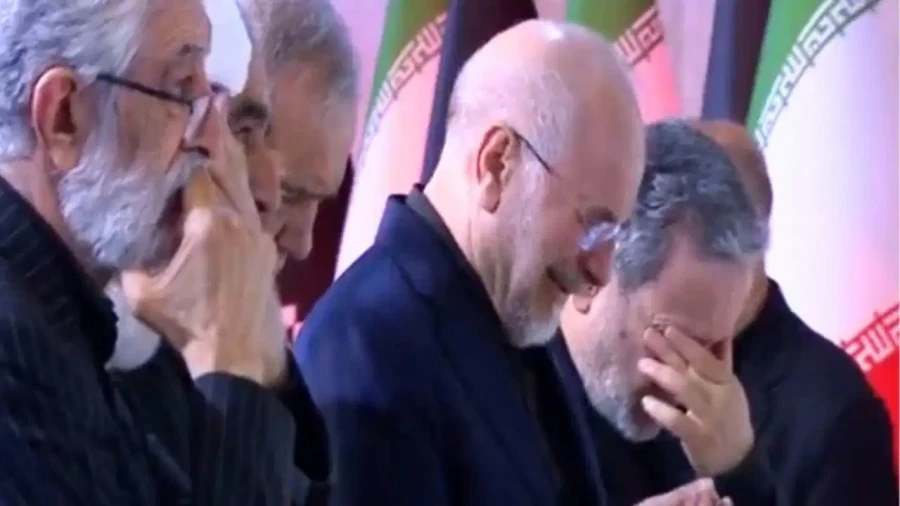
The capital city of Tehran witnessed deeply emotional scenes as Iran bid farewell to its former Supreme Leader, Ayatollah Ali Khamenei. During the state funeral and farewell ceremonies, prominent Iranian figures including Parliament Speaker Mohammad Ghalibaf and Foreign Minister Abbas Araghchi were seen visibly moved, with tears streaming down their faces, while this poignant moment, captured by cameras during the official ceremony, reflected the somber and tense atmosphere currently prevailing in Iran as the nation pays its final respects to the late leader.
Massive International Presence in Tehran
The scale of the international gathering for the funeral rites has been significant. Iranian Foreign Ministry spokesperson Esmaeil Baghaei confirmed on Friday that high-level delegations from neighboring countries and beyond have arrived in the capital. According to official reports, at least 8 heads of government, including various Presidents and Prime Ministers, are in attendance. On top of that, the ceremony is being attended by the Speakers of Parliament from 12 different nations, underscoring the diplomatic weight of the event.
Esmaeil Baghaei further elaborated that the farewell ceremony involves participation from nearly 100 countries, including various citizen groups and prominent global personalities. Official delegations from Eastern European countries, along with notable figures and parliamentarians, are also part of the proceedings. However, Iran has notably excluded certain nations from the invitation list. Countries in Europe that officially supported the military actions of Israel and the United States against Iran weren't invited to participate in the funeral rites.
Security Measures and Regional Impact
The funeral of Ayatollah Ali Khamenei, who passed away on February 28 this year following attacks attributed to the United States and Israel, has prompted unprecedented security arrangements. Tehran Governor Mohammad Sadegh Motamedian stated that the administration is ensuring the highest level of security and protection for the farewell and departure ceremonies of the martyred leader. The impact of the funeral is being felt across the region, with Baghdad Governor Atwan al-Atwani announcing that Baghdad will remain closed to facilitate the funeral procession of the leader of the Islamic Revolution.
Indian and Russian Dignitaries Pay Tribute
India was represented at the funeral ceremonies on Friday by a high-level delegation. Minister of State for External Affairs Pavitra Margherita and the Governor of Bihar, Lieutenant General (Retired) Syed Ata Hasnain, attended the event on behalf of the Indian government. The Iranian Embassy in India also shared images on social media platform X, showing prominent Indian political figures paying their respects. Among those mentioned were Peoples Democratic Party (PDP) President Mehbooba Mufti and senior Congress leader Salman Khurshid, who heads the party's foreign affairs department.
Russia also sent a high-ranking official to the ceremony. Dmitry Medvedev, the Deputy Chairman of the Security Council of Russia, arrived in Tehran on July 3 to participate in the funeral rituals. The Russian Foreign Ministry confirmed his arrival, noting his presence at the solemn ceremony held at Tehran's Grand Mosalla, where he joined other world leaders in honoring the late Supreme Leader.
Distinguished Guests from Across the Globe
The ceremony at the Grand Mosalla saw a gathering of Iran's top leadership alongside foreign dignitaries. Iranian officials present included President Masoud Pezeshkian, Parliament Speaker Mohammad Baqer Ghalibaf, Judiciary Chief Gholam-Hussein Mohseni-Ejei, and Expediency Council Chairman Ayatollah Sadeq Amoli Larijani. The international guest list featured Gurbanguly Berdimuhamedov, Chairman of the People's Council of Turkmenistan; Iraqi President Nizar Amadi; Armenian Prime Minister Nikol Pashinyan; Tajik President Emomali Rahmon; and Pakistani Prime Minister Shehbaz Sharif accompanied by Army Chief General Asim Munir. Nechirvan Barzani, President of the Kurdistan Region, was also in attendance.
The event also saw the participation of Parliament Speakers from Iraq, Azerbaijan, Bangladesh, Uzbekistan, Belarus, and Kyrgyzstan. Foreign Ministers from Nicaragua, Congo, and Burkina Faso, as well as the Speaker of the Egyptian Senate and the Speaker of the Omani Parliament, were present. International organizations were represented by Nurlan Yermekbayev, Secretary-General of the Shanghai Cooperation Organization (SCO), the Secretary-General of the D-8 Organization for Economic Cooperation, and the Deputy Secretary-General of the Organization of Islamic Cooperation. Other notable attendees included Turkish Vice President Cevdet Yilmaz and Saudi Deputy Foreign Minister Waleed al-Khereiji.
Funeral Timeline and Public Viewing
The funeral proceedings are expected to be among the largest international gatherings in Iran's recent history. Iranian authorities estimate that between 150 lakh and 200 lakh people will participate in the various mourning events scheduled over several days. The ceremonies will continue through the weekend. On Monday, a major funeral procession will take place in Tehran, preceded by the body being placed at the Grand Mosalla for public viewing. The gates of the Mosalla are expected to open to the general public at 6 AM local time on Saturday, though they may open earlier depending on the situation.
Following the ceremonies in Tehran, the remains will be taken for further rituals in Qom, and subsequently to Baghdad, Karbala, and Najaf. The final burial is scheduled to take place on July 9 in the city of Mashhad, marking the conclusion of the extensive state mourning period for the former Supreme Leader.