
- India,
- 26-Nov-2026 08:35 PM IST



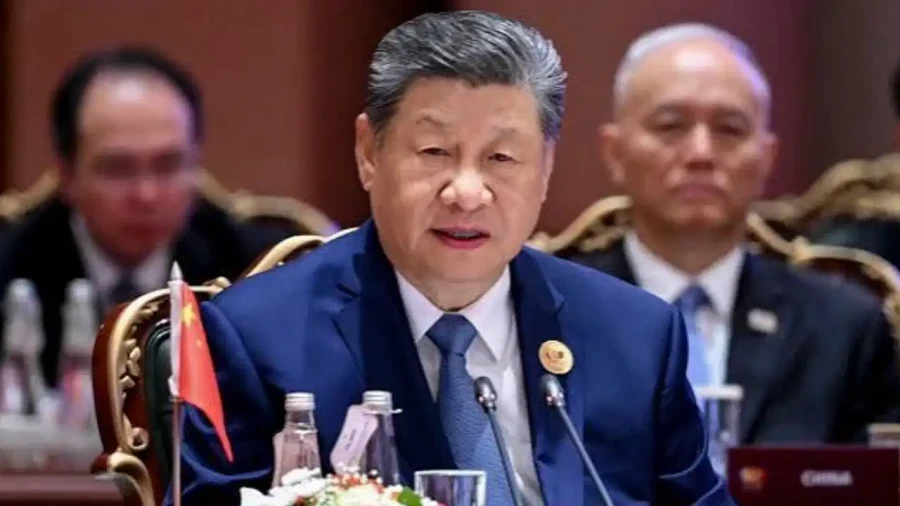
A massive political upheaval has once again surfaced in China as President Xi Jinping has systematically begun sidelining and eliminating his potential successors one by one. In the latest development, the Chinese government has launched a high-profile investigation against Shanghai party chief and Politburo member Chen Jining on serious allegations of corruption, while sixty-two-year-old Chen Jining was widely considered to be the primary successor to President Xi Jinping. Chen Jining was appointed as the party chief of Shanghai in the year 2022, and prior to reaching this highly influential position, he was diligently serving as the mayor of Beijing. However, following strict orders issued directly by President Xi Jinping, disciplinary action has now been initiated against him, and the Chinese government has currently pushed him completely underground. Looking closely at the history and ongoing political trends of the Chinese Communist Party, Chen Jining is certainly not the first official to be abruptly removed under the banner of anti-corruption campaigns. China has previously taken severe action against three other prominent officials, and what makes this entire scenario particularly fascinating and noteworthy is that all three of those leaders were also widely perceived as the main successors to Xi Jinping at various points in time.
Foreign Policy magazine revelations and collective leadership discussions
According to a detailed report published by Foreign Policy magazine, Chinese President Xi Jinping recently convened a high-level strategic meeting specifically focused on the selection of his future successor. During this critical meeting, it was formally decided that the Chinese government would operate under a collective leadership model in the coming times. However, ground realities appear drastically contradictory, as President Xi Jinping doesn't tolerate any potential successor standing in his path. The core reason behind the aggressive action taken against Chen Jining extends far beyond mere corruption, deeply rooted instead in the sensitive succession issue that was projected to culminate Importantly by the year 2027. In the upcoming year 2027, Chen Jining was strongly positioned to stake a formidable claim regarding the succession to the Chinese presidency, and this disciplinary action has been set into motion well ahead of that political timeline. The official stance presented by the Chinese government asserts that technocrat-turned-politician Chen Jining engaged in corrupt practices during his tenure in Shanghai. Recently, the Chinese president emphatically declared that a zero-tolerance policy would be strictly maintained regarding corruption, and according to Chinese state media outlets, this very policy served as the official pretext for taking action against Chen Jining.
Other key contenders who fell victim to Xi Jinping's purges
A comprehensive list has emerged detailing the prominent leaders who were initially regarded as frontrunners in the succession race and were subsequently targeted and removed from power. The first major name in this extensive catalog is Ma Xingrui, who served as the party chief of the Xinjiang province. Disciplinary actions against Ma Xingrui commenced abruptly in April 2026. Xingrui was firmly included among the elite list of contenders identified as potential successors to Chinese President Xi Jinping. Allegations were leveled against Xingrui accusing him of accepting bribes in exchange for official favors. Currently, the disciplinary inspection unit of the Chinese Communist Party is thoroughly investigating this intricate case. The second major figure on this list is Zhang Youxia, who held the position of a top-tier military officer in China. Zhang Youxia occupied the highly influential office of the vice-chairman within the Central Military Commission, with only President Xi Jinping positioned above Zhang in the military hierarchy, while zhang Youxia was also inducted into the powerful Politburo of the party and was widely regarded as a successor to Xi Jinping, yet sudden disciplinary measures were enforced against him in January 2026. On top of that, He Weidong constitutes a major part of this narrative as well. He Weidong served as a supreme military officer of the Chinese armed forces alongside being a respected member of the Politburo. In a startling twist, He Weidong was also widely recognized as an old personal friend of Chinese President Xi Jinping. Suspicions arose against He Weidong alleging that he leaked highly classified Chinese military intelligence secrets to the United States. The downfall of these towering political and military figures clearly demonstrates that President Xi Jinping has no intention of tolerating any potential challenge or designated successor within his political horizon.